News
CRITERION’S “WORLD CINEMA PROJECT, VOL. 2” OFFERS A FILM CLASS IN A BOX
Brian Tallerico
In 2007, Martin Scorsese created the World Cinema Foundation, a non-profit organization that exists to preserve and restore films from around the world that might not otherwise not only fail to find an audience but even survive the brutal passage of time. Scorsese is widely acknowledged as one of history’s most essential filmmakers, but he is also a champion for the form overall, more deeply involved in the international film scene than even his hardcore fans may realize. The World Cinema Foundation has restored almost three dozen films already from around the world and six of them have been compiled in a box set from the Criterion Collection called “World Cinema Project, Vol. 2,” just released in a Blu-ray/DVD combo set. These films, and their supplemental material, offer something akin to a film course at a major college, allowing you to experience and appreciate works that you not only might not have otherwise seen but might have been unseen by anyone were it not for the WCF. As with any box set this ambitious, the quality varies from film to film, but it’s the cumulative impact of the six-movie experience that’s so valuable, reminding us of the variability of the art form more than anything else. I do wish the next box set would include a film by a female director, but it’s also nice to see Criterion reaching out of their typically European film-view to offer works from other parts of the world.
While it’s almost certain that you haven’t heard of all six films in the set, there are at least two very familiar names: Thai filmmaker Apichatpong Weerasethakul, who would go on to helm the Palme d’Or-winning “Uncle Boonmee Who Can Recall His Past Lives” and last year’s “Cemetery of Splendour,” and the incredible Chinese director Edward Yang, who helmed acknowledged modern classics “A Brighter Summer Day” and “Yi Yi (A One and a Two)”. They are joined in this set by films from Lino Brocka of the Philippines, Ermek Shirnabaev of Kazakhstan, Mário Peixoto of Brazil, and Lütfi Ö. Akad of Turkey. Again, Criterion has been accurately criticized for so heavily focusing their releases on Europe and North America, so it’s nice to see this set truly live up to the first word in its title: “World.”
It’s also notable to consider the chronological diversity of this set. The Brazilian film, a stunning piece of lyrical silent filmmaking called “Limite,” was released, barely even, in 1931. Now recognized as arguably the best Brazilian film in history, it went virtually unseen for decades, even though Orson Welles claimed to have seen it near the time of its original release. The film was one of those works considered lost to history until it was restored by the WCP (although you should be warned that one of the reels is in such bad shape that it is still virtually unwatchable). It is a nearly-two-hour film that can best be described as dreamlike. Three people are on a boat, remembering their lives in poetic, evocative, black-and-white imagery. There is little plot or traditional dialogue cards one would see in a silent film. It is mesmerizing in its simplicity, as if you’re watching someone come up with their own language of cinema.
On the other end of the geographical and cultural spectrum, there’s Lino Brocka’s incendiary “Insiang,” the first film from the Phillipines to play the Cannes Film Festival in 1976 and a fascinating blend of high melodrama and documentary-like detail. This character study takes place in the slums of Manila and is unsparing in its brutality, both in the documenting of the conditions there and the story of a young woman who takes bloody vengeance on her rapist. The restoration here is particularly remarkable, never revealing the film’s age or reportedly weak condition of source material.
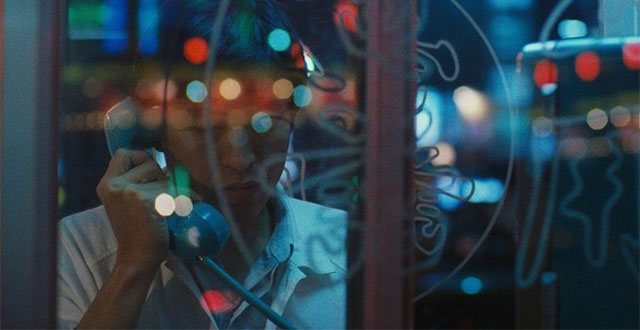
Of course, the two films from the recognized masters have notable value, even if they don’t quite hold up to their director’s best works. Weerasethakul’s “Mysterious Object at Noon” is a fascinating film experiment that blends documentary filmmaking and a classic storytelling game, the “exquisite corpse,” in which people continue the same story. It’s a surreal and strange film that works more as an experiment than a realized piece of cinema, but feels especially resonant given the works that its filmmaker would produce over the two decades since its release. Yang’s “Taipei Story,” made in collaboration with another Cannes favorite, Hou Hsiao-hsien, who stars in the film, is a characteristically detailed examination of a part of the world in flux, capturing Taiwan in the ‘80s in a way you haven’t really otherwise seen.
The final two films in the set, the Turkish “Law of the Border” and Kazakh “Revenge” feel somewhat limited by their resources, especially the latter film, which seeks to tell generations of vengeance through one deeply philosophical story. Although its storytelling doesn’t quite work, it has some striking imagery, and I must admit to a lack of deep knowledge about films from this part of the world. In a sense, that’s what box sets like this are for.
The films themselves are the real draws for this box set but the special features are notable as well, particularly introductions from Scorsese himself that offer brief history and longer featurettes that provide more, such as when Walter Salles details the impact of “Limite” or Hou himself discusses “Taipei Story.” And the booklet is wonderful supplemental material, offering essays from critical luminaries like Kent Jones, Bilge Ebiri, and more. A full list is below:
· 2K, 3K, or 4K digital restorations of all six films, presented courtesy of the World Cinema Project in collaboration with the Cineteca di Bologna, with uncompressed monaural or 5.1 surround DTS-HD Master Audio soundtracks on the Blu-rays
· Remastered digital soundtrack for Limite, created from archival recordings
· New introductions to the films by World Cinema Project founder Martin Scorsese
· New interview programs featuring film historian Pierre Rissient (on "Insiang"), director Apichatpong Weerasethakul (on "Mysterious Object at Noon"), director Ermek Shinarbaev (on "Revenge"), filmmaker Walter Salles (on Limite), film producer Mevlüt Akkaya (on "Law of the Border"), and filmmakers Hou Hsiao-hsien and Edmond Wong in conversation (on "Taipei Story," which Hou cowrote and acted in)
· Updated English subtitle translations
· Three Blu-rays and six DVDs, with all content available in both formats
· PLUS: A booklet featuring an introduction and essays on the films by Phillip Lopate, Dennis Lim, Kent Jones, Fábio Andrade, Bilge Ebiri, and Andrew Chan
To order your copy of Criterion's "World Cinema Project, Vol. 2," click here.
Martin Scorsese’s World Cinema Project 2
Clayton Dillard
As the figurehead and master of ceremonies for the World Cinema Project (WCP), Martin Scorsese has cemented his bid to become the premier ambassador for both global film preservation and the sharing of cinema that such an endeavor entails. Scorsese has become nothing short of a Henri Langlois figure, whose Cinémathèque Française during the 1940s likely saved hundreds, even thousands of films from being permanently lost or destroyed. The WCP, in short, picks up where Langlois left off when he died in 1977 by focusing on securing and restoring films that by and large were produced outside the confines of North America and Western Europe.
As packaged through the Criterion Collection, the first six of the WCP’s restorations were released in December 2013. The films were eclectic and seemingly boxed together precisely because of their affiliation with WCP, which isn’t so much a problem as it is a curiosity. Criterion had released no other boxed set of multiple films—even on their now-defunct Eclipse line—that weren’t connected by either a director, star, studio, or country. The studio repeats the identical approach in their second volume, packaging together six films, ranging from Mário Peixoto’s 1931 silent Limite to Apichatpong Weerasethakul’s 2000 feature-length debut Mysterious Object at Noon, that have no immediate relationship to one another aside from their WCP restorations. Thus, Criterion operates here more as a server than a curator of films, offering titles in a single packaging that would otherwise never be affiliated or compared in any immediate way. This approach, then, offers less of an historical overview of world cinema than a glimpse into the hive mind of the WCP’s approach to rescuing films from history’s unsparing iron fist.
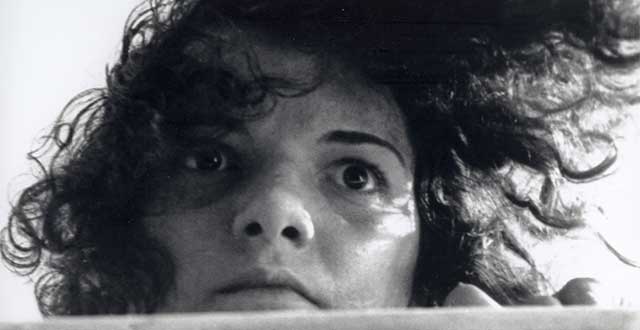
Limite constructs a rhythmic approach to time and space that stands alongside the finest efforts of Abel Gance, Jean Epstein, and Sergei Eisenstein. After an opening sequence introducing two women and a man lost at sea, Peixoto uses flashbacks to explain the genesis of their predicament. Close-ups and canted framings govern nearly every scene, as does an unforgettable arrangement of music, featuring Igor Stravinsky and Erik Satie, among others. The recurring image of a woman bound by handcuffs and staring into the camera belongs among the greatest emblems in all of silent cinema.
Scorsese calls Lütfi Ö. Akad’s Law of the Border “a Turkish Western” in a brief introduction, but that conceptualization seems counterproductive since Akad’s 1966 film has more in common with the formal and thematic interests of neorealism. While the story, set along the Turkish-Syrian border, involves a gang of smuggles led by the death-driven Hidir (Yilmaz Güney), the focus is less on thematizing civilization and violent struggle than coming to grips with a nation’s development following a period of sustained oppression and restriction. As the film winds to its tragic end, Akad grapples with Hidir’s infinitesimal relation to governance and, perhaps, his own.
While Akad’s neorealist texture ultimately animates Hidir’s decline, Lino Brocka’s 1976 film Insiang entrenches itself firmly within the register of melodrama through an abusive love triangle set in the Philippines between the titular character (Hilda Koronel), her mother (Mona Lisa), and her mother’s lover (Ruel Vernal), whose rape of Insiang prompts a quietly conceived system of revenge by the abused. Released the same year as Nagisa Oshima’s In the Realm of the Senses, Brocka’s film maintains a similarly unsparing focus on sexual violence and the simultaneously physical and psychological prison it creates for its victims. If Insiang is dubiously feminist in any strict sense, its persistent focus on Insiang’s eye line suggests a passageway into her mind and experience that more common rape-revenge thrillers wholly omit.
The crown jewel of the collection is Taipei Story, arguably Edward Yang’s finest achievement. Co-written with Hou Hsiao-hsien, who also stars, the 1985 film performs an autopsy on a handful of relationships, all of them unfolding against a neo-lit Taipei, which seems by turns inviting and ruinous. After Lung (Hou) returns from a trip to Los Angeles, he explains its “just like Taipei,” and spends much of the remainder of the film contemplating a move to the States with Chin (Tsai Chin), a woman who’s lost the ability to articulate her feelings of discontent. As a character bleeds out in a Taipei gutter near the film’s conclusion, an American corporation is setting up shop just a few blocks away, thus completing the other half of the tautology: Taipei is just like L.A.
Ermek Shinbarbaev’s 1989 film Revenge makes remarkable use of high-key lighting to stage a violent series of events that spans hundreds of years. Kazakhstani writer Anatoli Kim builds to an examination of post-WWII central Asia, where a Korean youth is hell-bent on avenging a murdered, unknown half sister, but the script begins in the 17th century in the kingdom of Joseon, where the seeds of violence are initially sewn. Shinbarbaev’s camera often remains still, using floods of light and splashes of color as a counterpoint to the ugliness of nearly every character’s actions and intent. The result is thoroughly unsettling in its contrasts and, like Akira Kurosawa’s similarly vibrant Ran made just a few years prior, requires a significant amount of historical context in order to fully grasp it implications.
Weerasethakul’s Mysterious Object at Noon dispenses with color entirely, but that shouldn’t suggest a downward step in visual detail; the director’s 16mm black-and-white long takes linger on screen for minutes at a time before cutting to the next shot, asking us to encounter them in all of their shape and depth. A documentary-fiction hybrid, the film collects stories—some real, some fabricated—from various Thai citizens, who recount in talking-head fashion their personal experiences. And the result, especially when the stories and images appear to merge, is transfixing. In one memorable shot, a washed-out exterior just outside a doctor’s office appears to have been lit to eliminate all but the faintest shadow. Whether or not the image is “real”—that is, captured naturally—seems precisely Weerasethakul’s point: The line between fact and fiction always dissolves when filtered through the lens of a camera.
Image/Sound
The World Cinema Project makes unwavering strides to restore films to the best of their abilities. In the case of films like Limite and Law of the Border, where extant materials are either incomplete or irrevocably damaged, the restoration efforts don't overcompensate with digital manipulation; the films are simply presented in accordance with the technology that produced them. When negatives and existing prints are in immaculate condition, as is the case with Taipei Story and Revenge, the result is a revelation: These 2K and 4K transfers are flawlessly assembled and color timed, with 's image detail especially of note for its depth of field and sharpness. The 4K transfer of Insiang and the 3K transfer of Mysterious Object at Noon are largely free of defect, with the colors of the former popping from the frame like the quick bursts of violence that structure its climax. Sound is flawless across the transfers; the 5.1 DTS-HD mix of Mysterious Object at Noon is especially delightful and reveals Apichatpong Weerasethakul's intricate sound design in ways previously unheard on home disc.
Extras
It's difficult, given the importance of these restorations, not to be at least a little disappointed with the slim supplements. Each film is gifted an introduction from Martin Scorsese and an accompanying interview with either a historian, producer, or filmmaker enthusiasts. Scorsese's introductions each clock in at less than two minutes and provide the primary details about production origins and the restoration efforts. The interviews are much weightier. Walter Salles explains his affinity for Limite by comparing it to The Passion of Joan of Arc. Producer Mevlüt Akkaya explains how Law of the Borderhelped begin an era of realistic filmmaking in Turkey, which focused on directors and their visions. Film historian Pierre Rissient explains how he helped bring Insiang to Cannes and how he tried to help Lino Brocka make the film visible to audiences beyond the Philippines. Hou Hsioa-hsien and filmmaker Edmond Wong chat about Hou's role in Taipei Story and the film's statements about the transformation of Taipei. Ermek Shinarbaev explains how he and writer Anatoli Kim wanted Revenge to be a mixture of Korean history, poem, legend, and fairy tale. Finally, Apichatpong Weerasethakul discusses the origins of Mysterious Object at Noon, which was conceptualized after seeing several films by Abbas Kiarostami and Mohsen Makhmalbaf. The box set also comes with a 60-page booklet featuring essays from critics Phillip Lopate, Dennis Lim, Kent Jones, Fábio Andrade, Bilge Ebiri, and Andrew Chan.
Overall
At once indispensible and flawed, Martin Scorsese’s World Cinema Project 2 is best viewed as another fine product from the hopefully ongoing collaboration between Criterion and the WCP, even if the grouping of films remains, as with the first set, little more than incidental.
Cannes Classics 2017
|
|
The program of Cannes Classics 2017 will be dedicated for its most part to the history of the Festival. Almost fifteen years ago, when the relationship between contemporary cinema and its own memory was about to be shaken by the emergent arrival of digital technology, the Festival de Cannes created Cannes Classics, a selection that displays the work of valorisation of heritage cinema carried out by the production companies, the right-holders, the cinematheques or the national archives around the world. Being now an essential component of the Official Selection and a presence of the history of cinema which inspired several international festivals, Cannes Classics showcases vintage films and masterpieces of the history of cinema in restored prints. Because Cannes is also devoted with the mission of enchanting the audience of today's relationship with the memory of cinema, Cannes Classics puts the prestige of the biggest festival of the world at the service of the cinema rediscovered, accompanying all the new exhibitions: releasing in movie theaters, on VOD or on DVD/Blu-ray editions of the great works of the past. The program of the 2017 edition of Cannes Classics consists of twenty-four screenings, one short film and five documentaries. The films are screened as wanted by the right-holders, in DCP 2K or DCP 4K, and L'Atalante by Jean Vigo that Gaumont wished to screen in 35mm. The films selected for this 2017 edition will focus mostly on the history of Cannes. They come from nations that have allowed the Festival de Cannes to become a land of cinematographic discoveries: Hungary, Lebanon, Serbia, United Kingdom, Italy, United States, Israel, Mauritania, Niger, Poland, Switzerland, Japan, Spain, the Netherlands, Canada, Belgium and Australia. Many countries which also consider that safeguarding heritage cinema is essential. The films will be screened in the Palais des Festivals, Salle Buñuel or Salle du Soixantième, in attendance of those who have restored them and, if they are still among us, of those who have directed them.
From 1946 to 1992, from René Clément to Victor Erice, sixteen history-making films of the Festival de Cannes •1946: La Bataille du Rail (Battle of the Rails) by René Clément (1h25, France): Grand Prix International de la mise en scène and Prix du Jury International. Presented by Ina. Film digitized and restored by Ina with the support of the CNC. 2K restoration made from an acetate interpositive and an answer print. Technical means: Jean-Pierre Peltier. Coordination: Bénilde Da Ponte, Brice Amouroux.
Presented by TF1 Studio in collaboration with la Cinémathèque française and the support of the CNC, of the Archives audiovisuelles de Monaco, of Kodak and the CGR cinémas. 4K Restoration from nitrate image negative and a sound duplicate made by Hiventy. Please note that this presentation is the preview of a major Clouzot event scheduled in France in the fall of 2017.
Presented by the Hungarian National Film Fund - Hungarian National Film Archive. A 4K Scan and Digital Restoration from the original 35mm image & sound negatives plus additional materials: the original dupe positive and another film positive. Restoration made by the Hungarian National Film Fund – Hungarian Filmlab.
Presented by Abbout Productions and Fondation Liban Cinema. With the generous support of Bankmed – Lebanon. The original 35mm Fine Grain Master Positive was scanned in 4k, retouched and color-corrected in a resolution of 2K. All works were carried out by Neyrac Films - France. Sound restoration by db Studios - Lebanon. In collaboration with The Talkies. World Sales: Nadi Lekol Nas.
Presented by Jugoslovenska Kinoteka/The Yugoslav Film Archive and Malavida. New 35mm print from the original negative in perfect shape then scanned in 2K and cleaned up.
Presented by Criterion, Cineteca di Bologna and Istituto Luce - Cinecittà, in collaboration with Warner Bros and Park Circus. Restoration work carried out at Criterion, New York and L'Immagine Ritrovata, Bologna under the supervision of Director of Photography Luca Bigazzi.
A presentation of the Jerusalem Cinematheque – Israel Film Archive, in partnership with United King Films and the support of the Rabinovich Foundation. The original 35mm black and white negatives were scanned in 4K by Cinelab Romania. It was digitally restored and finalized in 2K by Opus Digital Lab in Tel Aviv. Restoration and color grading lead by Ido Karilla, supervised by DOP David Gurfinkel.
Presented by The Film Foundation. Restored by Cineteca di Bologna at L'Immagine Ritrovata laboratory in collaboration with Med Hondo. Restoration funded by the George Lucas Family Foundation and The Film Foundation's World Cinema Project.
Presented by the CNC, Inoussa Ousseini, the Comité du film ethnographique and the Fondation Jean Rouch. Digital restoration made from the 2K digitization of the 16mm negatives. Restoration carried out by L21.
Presented by Argos Films and TAMASA. Digization and 4K resoration from the original negative by Eclair. Sound restoration from the original magnetic sound by L.E. Diapason. The film will be released in French theaters.
Presented by Park Circus. 4K restoration by Twentieth Century Fox and the Academy Film Archive in collaboration with The Film Foundation. The restoration was produced from the original camera negative at Sony Colorworks in Culver City California.
A presentation of the ZEBRA Film Studio (Studio Filmowe ZEBRA) with the collaboration of the Polish Film Institute. 2K film restoration from original colour 35 mm negative. Restored sound from original magnetic tape. Restoration lead by Daniel Pietrzyk, colour grading lead by Aleksandra Kraus, at Yakumama Film, Warsaw. Sound restoration lead by Tomasz Dukszta. Artistic supervision by: Andrzej Wajda (director), Jerzy Łukaszewicz (DOP), Piotr Zawadzki (sound).
Presented by DFK FILMS LTD. Zürich. Restoration from the original 35mm negative, from the interpositive and the positive print. Restoration and new sound mix from the original digitized tapes. International Sales: The Match Factory.
Presented by Toei. 4K Scan, image restoration ARRISCAN and sound Golden Eye in 2K from the 35mm original negative, a duplicate and video tapes.
Presented by the Filmoteca de Catalunya and Camm Cinco SL. 6K scan, restoration and color-grading from the 35mm negatives and other original video tapes. Digitazing and sound restoration from 35mm magnetic tapes. Technical support made by the Filmoteca de Catalunya, supervised by Victor Erice. Variations on the initial editing brought by the director.
Spiegel van Holland (Miroirs de Hollande) by Bert Haanstra (1951, 10mn, The Netherlands) / La Seine a rencontré Paris by Joris Ivens (1958, 32mn, France) / Pas de deux by Norman McLaren (1968, 13mn, Canada) / Harpya by Raoul Servais (1979, 9mn, Belgium) / Peel by Jane Campion (1986, 9mn, Australia) / L’Interview by Xavier Giannoli (1998, 15mn, France) / When the Day Breaks by Amanda Forbis and Wendy Tilby (1999, 10mn, Canada)
•Madame de… by Max Ophüls (1953, 1h45, France) A Gaumont restoration. A show to pay a tribute to Danielle Darrieux for her birthday and presented by Dominique Besnehard, Pierre Murat and Henri-Jean Servat who will screen the latest filmed interview of Danielle Darrieux.
• L’Atalante by Jean Vigo (1934, 1h28, France), restored 35mm print Presented by Gaumont, la Cinémathèque française and The Film Foundation of Martin Scorsese. First digital restoration in 4k and conversion to a 35mm print. A new discovery of the closest version of the director’s work thanks to Gaumont, Luce Vigo and historian Bernard Eisenschitz. Restoration carried out at L’Image Retrouvée laboratory in Bologna and Paris.
• Native Son (Sang noir) by Pierre Chenal (1951, 1h47, Argentina) A presentation by Argentina Sono Film. Restoration with the collaboration of the Library of Congress.
• Paparazzi by Jacques Rozier (1963, 18mn, France) Presented by Jacques Rozier and la Cinémathèque française. 4K Digitization and 2K restoration works made from image and sound negatives at Hiventy laboratory, with the support of the CNC and in collaboration with Les Archives Audiovisuelles de Monaco, la Cinémathèque Suisse and Extérieur nuit. The film will be introduced by Jacques Rozier.
• Belle de jour (Beauty of the Day) by Luis Buñuel (1967, 1h40, France) Presented by STUDIOCANAL. Digitization from the original negative and 4K restoration carried out by Hiventy laboratory for STUDIOCANAL with the support of the CNC, of la Cinémathèque française, of the Fonds Culturel Franco-Américain and the Maison YVES SAINT LAURENT. French theater distribution: Carlotta.
• A River Runs Through It (Et au milieu coule une rivière) by Robert Redford (1992, 2h04, United States of America) Presented by Pathé. 4K Scan and 4K restoration from original image and sound 35mm negatives. Restoration carried out by Pathé at Technicolor France laboratory for the image in collaboration with Philippe Rousselot, cinematographer of the film, and L.E. Diapason for the sound restoration.
•Lucía by Humberto Solas (1968, 2h40, Cuba) A presentation of the Film Foundation. Restored by Cineteca di Bologna at L’Immagine Ritrovata laboratory in association with Instituto Cubano del Arte e Industria Cinematográficos (ICAIC). Restoration funded by Turner Classic Movies and The Film Foundation’s World Cinema Project.
DOCUMENTARIES ABOUT CINEMA
The history of cinema by cinema itself, a presentation of five documentaries
Presented by Alizé Production. Produced by Alizé Production, co-produced by RTBF (Belgian television) & Proximus. A joyful road movie to discover the Belgian cinema which has been at Cannes for 70 years. The filmmakers of yesterday are talking with those of today to paint a picture of a free and heterogeneous cinema. A "Belgian story" of the biggest festival in the world.
Presented by Stranger Than Fiction Films. Produced by Stranger Than Fiction Films, with Screen Australia, ABC TV Arts, Screen NSW and Adelaide Film Festival. An love adventure of film critic David Stratton with his adopted country, Australia, which led him to understand himself. It is also the glorious history of Australian cinema and its creators told by this Cannes-regular film-lover interested in the world.
Presented and produced by True Studio Cinema. Young actor Leon Vitali abandoned his prosperous career after Barry Lyndon to become the faithful right hand of director Stanley Kubrick. For more than two decades, Leon has played a crucial role behind the scenes by helping Kubrick. A complex and interdependent relationship between Leon and Kubrick based on devotion, sacrifice and the harsh and joyful reality of creative process.
Presented by ARTE France and Showtime Documentary Films. Produced by YUZU Productions, coproduced by ARTE France, in association with ro*co films productions. Cary Grant is one of the biggest Hollywood actors. In his fifties, he started a cure of LSD to free himself from his demons. For the first time, with his words, he retraces his journey. The story of a man in search of himself and the love he did not find in his life. The words of Cary Grant are interpreted by Jonathan Pryce.
Presented and produced by Carlotta and Kidam. Three young cinephiles follow Jean Douchet, question his friends and former students. This documentary reveals the man and his critical philosophy, a part of the history of the Cahiers du Cinéma and this Art of loving to which he has devoted his existence. |
|
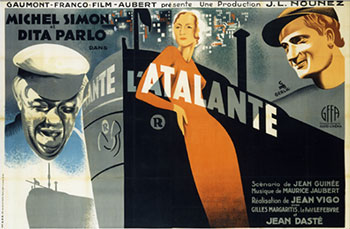
Gaumont, La Cinematheque Francaise And The Film Foundation Partner To Restore L'ATALANTE By Jean Vigo
Gaumont, La Cinematheque Francaise, and Martin Scorsese’s non-profit organization, The Film Foundation, have collaborated for the first time to restore Jean Vigo’s masterpiece, L'ATALANTE. For this ambitious project, the partners enlisted scholar Bernard Eisenschitz, who had previously worked on two earlier restorations of L'ATALANTE. The director’s daughter, Luce Vigo, also provided invaluable assistance.
This is the first 4K digital restoration of the film and the goal was to stay true to the director’s original work, referencing vintage prints, earlier photochemical restorations and negatives. The restoration was carried out by L’Immagine Ritrovata in Bologna and Paris.
Thanks to the collaboration of numerous cinematheques (La Cinematheque Francaise, Cineteca Italiana in Milan, BFI National Film Archive, Cinémathèque Royale de Belgique) that loaned their prints, a frame-by-frame comparison from several different versions was completed to note scene variations. Using the edge codes, the film stocks were dated to choose the earliest and best version for the 4K scan.
The same workflow was utilized for the sound restoration; comparison of all the elements to obtain the best audio quality. It was especially important to respect the integrity of the original score by Maurice Jaubert.
With this restoration, Gaumont, Luce Vigo, who passed away on February 12th, and Bernard Eisenschitz, completed many years of research on the existing film material, writings, documents, and testimonies, always staying faithful to the intentions of Jean Vigo.
The restored version of L'ATALANTE, will be screened as part of this year’s Cannes Classics. In addition, Gaumont and The Film Foundation are joining forces to restore three other Vigo titles (ZERO DE CONDUITE, A PROPOS DE NICE, TARIS).