News
Seven classic restored films to show at Abu Dhabi Film Festival 2014
Ben East
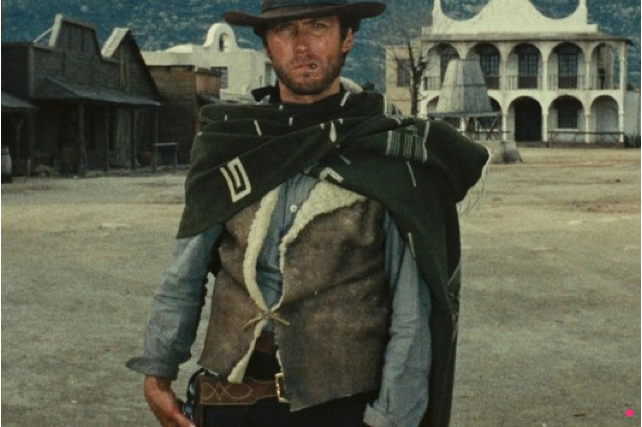
It’s one of the classic scenes in cinema history. Clint Eastwood strolls down the main street of a Mexican border town, determined to win his Fistful of Dollars.
With eyes fixed firmly ahead, The Man With No Name murmurs to the undertaker: “Get three coffins ready.” But A Fistful of Dollars is now half a century old. The coffins, indeed, might be a neat metaphor for the original film stock, which is decaying fast.
And yet on November 1, the film will be shown at the Abu Dhabi Film Festival (ADFF) in stunning clarity, thanks to a restoration supported by Martin Scorsese’s The Film Foundation (TFF), an organisation dedicated to protecting, preserving and presenting motion pictures.
The collaboration with ADFF – which will include a film-preservation workshop – came about after one of the festival’s programmers with a special interest in the field, Mohammed Khawja, met Scorsese in Cannes a few years ago. After watching the progress of the foundation’s international wing, the World Cinema Project (WCP) – which helps countries that lack the resources to preserve their own film heritage – a more formal partnership was agreed for this year’s festival.
Sergio Leone’s spaghetti Western rounds up an impressive programme of films restored by TFF being screened at ADFF, that also includes Rebel Without a Cause, The Life and Death of Colonel Blimp, Mary Poppins, the Beatles movie A Hard Day’s Night and two WCP movies, Sergei Parajanov’s The Color of Pomegranates (1968) and Lino Brocka’s Manila in the Claws of Light (1975).
As TFF’s executive director Margaret Bodde explains, it is all the culmination of 25 years of hard work.
“The Film Foundation really grew out of Marty [Scorsese] being among this great group of filmmakers – [Steven] Spielberg, [George] Lucas, [Stanley] Kubrick, [Robert] Redford, [Sidney] Pollack – who really valued what cinema meant culturally and how it inspired their own creativity,” she says.
“But none of the major studios had preservation programmes in place in 1990. Film is a fragile medium and you can’t just assume that it’s always going to be around if you don’t take care of it. So they felt there was a need to preserve the great creative works of our times – simply because they are an expression of our humanity.”
TFF also came along at just the right time – as projection technology improved, it became obvious that the existing film stocks were not good enough. Commercially, too, someone buying a DVD re-release was not going to be satisfied with a scratchy transfer from a poor-quality film print.
The spin-off, says Bodde, is that these re-released films – usually restored by a process of scanning each frame, removing damage and dirt digitally and then colour correcting – became a window into culture and history around the world. Which is where, in 2007, the WCP entered the picture.
“A lot of the WCP films aren’t widely known,” says Cecilia Cenciarelli, its archival and restoration manager. “But that doesn’t mean they aren’t really important.
“Sometimes an archive might suggest a film to be restored, sometimes it’s a filmmaker who grew up as a cinephile in, say, Egypt, and thinks it needs preserving. So we discuss which films we’d like to work on, and then we always try to do the laboratory work in the country where the film was made.”
Carefully restoring classic movies might sound like a lovely job, but as Cenciarelli explains, it gets considerably more stressful when they find out there is only one print that survives. “And that can be down to everything from political turmoil to mould,” she says.
The main benefit for the WCP films is that TFF gets distribution rights, which means movies that might never have been seen beyond the borders of the country in which they were made can now be seen all over the world.
Manila in the Claws of Light was briefly famous in its native Philippines and was a hit at the 1978 Cannes Film Festival but the director, Brocka, had died in a car crash and the negative was literally torn. The restoration of the film, about life under the dictator Marcos, has now been seen in cinemas around the globe – as have 23 other WCP films, including many from the Middle East.
“We’ve always had an interest in restoring Middle Eastern work, simply because it’s such a diverse, rich and fascinating region,” says Cenciarelli. “Shadi Abdel Salam’s Al Momia is one of the masterpieces of Egyptian cinema, so it was great to restore that in 2009.
“We’ll continue to explore the area’s films for more projects like that one.”
• For more information about the work of TFF and WCP, visit www.film-foundation.org
• For more information on the festival, which runs from October 23 to November 1, go to www.abudhabifilmfestival.ae
2014 AVANT-GARDE MASTERS GRANTS AWARDED
National Film Preservation Foundation
|
THE BOOKS OF ED RUSCHA Among 10 Films Slated for Preservation San Francisco, CA (October 14, 2014)—The Books of Ed Ruscha, a tongue in cheek “portrait” of his own art by California artist Ed Ruscha, along with works by four other filmmakers will be saved through the 2014 Avant-Garde Masters Grants awarded by The Film Foundation and the National Film Preservation Foundation. All told, 10 films will be preserved and made available through the 2014 grants. "Ed Ruscha is world-renowned for his painting, photography, printmaking and artist books. Less known are his films. Now thanks to an Avant-Garde Masters grant to preserve his 1969 film The Books of Ed Ruscha, that is about to change,” said Jan-Christopher Horak, Director of the UCLA Film & Television Archive where the preservation work will take place. “Featuring Ruscha’s boyhood friend, musician Mason Williams, the film takes a delightfully wry look at Ruscha’s photographic books. We look forward to sharing this exciting aspect of Ruscha’s career with the public.” Also green-lighted for preservation are Globe (1971) by Ken Jacobs (Anthology Film Archives); FF (1986), Tr’cheot’my P’sy (1988), A Legend of Parts (1988), and Conscious (1993) by Julie Murray (Bard College); Tommy Turner’s Simonland (1984) and Rat Trap (1985), his collaboration with Tessa Hughes-Freeland (New York University); and Shirley Clarke’s Butterfly (1967, made with Wendy Clarke) and 24 Frames Per Second (1977) (Wisconsin Center for Film and Theater Research). Click here for a descriptive list. Now in its twelfth year, the Avant-Garde Masters Grants is the pioneering program funded by The Film Foundation and managed by the NFPF that saves films significant to the development of the avant-garde in America. The grants have preserved works by 58 artists, including Kenneth Anger, Samuel Beckett, Bruce Conner, Joseph Cornell, Oskar Fischinger, Hollis Frampton, Ernie Gehr, George and Mike Kuchar, and Carolee Schneemann. The full roster of projects is available on the NFPF Web site, www.filmpreservation.org. The National Film Preservation Foundation is the nonprofit organization created by the U.S. Congress to help save America’s film heritage. Founded in 1996, the NFPF has supported film preservation in all 50 states, Puerto Rico, and the District of Columbia and has helped save more than 2,166 films and collections. The NFPF is the charitable affiliate of the National Film Preservation Board of the Library of Congress. Created in 1990 by Martin Scorsese, The Film Foundation protects and preserves motion picture history. By working in partnership with archives and studios, the foundation has helped save over 620 films and programs these restorations throughout the world. The Film Foundation's World Cinema Project has restored films from 16 different countries representing the rich diversity of films from underrepresented regions. The foundation's free educational curriculum, The Story of Movies, teaches young people -- over 9 million to date -- about film language and history. Joining Scorsese on the board of directors are Woody Allen, Paul Thomas Anderson, Wes Anderson, Francis Ford Coppola, Clint Eastwood, Curtis Hanson, Peter Jackson, Ang Lee, George Lucas, Alexander Payne, Robert Redford, and Steven Spielberg. The Film Foundation is aligned with the Directors Guild of America. |

Abu Dhabi Film Festival to Host the Film Foundation/World Cinema Project
Abu Dhabi Film Festival
ADFF has announced a collaboration with Martin Scorsese’s The Film Foundation/ World Cinema Project (WCP).
As part of the collaboration, two newly restored international masterworks– Sergei Parajanov's THE COLOR OF POMEGRANATES and Lino Brocka’s MANILA IN THE CLAWS OF LIGHT– will be screened during ADFF, which takes place from October 23 to November 1, 2014. Both films were digitally restored in 4K resolution by the Cineteca di Bologna/L’Immagine Ritrovata and The Film Foundation/World Cinema Project and will be shown with existing English subtitles as well as new Arabic subtitles, provided by ADFF.
Established in 1990 by Martin Scorsese, The Film Foundation is a non-profit organization dedicated to protecting, preserving and presenting motion pictures. By working in partnership with the leading archives, museums and studios, the foundation has saved over 620 films and shown these restorations throughout the world. The Film Foundation created the World Cinema Project (WCP) to focus on the preservation and restoration of neglected films from around the world - particularly those countries lacking the financial and technical infrastructure to preserve their indigenous cinematic history.
WCP will be hosting a workshop at ADFF aimed at raising awareness for the global cause of film preservation and educating filmmakers about the importance of preserving their films. ADFF will work to promote future screenings of films restored by WCP at other festivals in the Arab region and across the globe.
Ali Al Jabri, Festival Director, said: “Cinema is an international language and ADFF strives to bring about enthusiasm, variety and a celebration of this universal form of expression. We are delighted to be collaborating with WCP to present these landmark films from Armenia and the Philippines as part of our strong commitment towards the global cause of film preservation and restoration. Each film is a cinematic revelation depicting a culture seldom seen by audiences on-screen.”
THE COLOR OF POMEGRANATES (1968) by Armenian director Sergei Parajanov, is a biography of the Armenian poet Sayat Nova that attempts to reveal the poet’s life visually and poetically depicting his coming of age, discovery of the female form, falling in love, entering a monastery and dying, all framed through both Parajanov’s imagination and the poems of Sayat Nova.
MANILA IN THE CLAWS OF LIGHT (1975) by Filipino director Lino Brocka, is an intense melodrama shot on the streets of Manila depicting the richly romantic but realistic odyssey of a boy named Julio, who arrives in Manila from the country to search for his childhood sweetheart, Ligaya. It is widely considered a landmark achievement of Filipino cinema.
“We’re honored to be a part of ADFF this year and present a special program on restored films by The Film Foundation (TFF) and the World Cinema Project,” said Margaret Bodde, Executive Director of The Film Foundation. “ADFF and TFF share a global commitment to the importance of film preservation, education, and public exhibition and we look forward to a fruitful partnership.”
The Film Foundation (TFF) and long-time partner Gucci will be presenting a special 4K screening of REBEL WITHOUT A CAUSE directed by Nicholas Ray. The film was digitally restored by Warner Bros., with support from Gucci and The Film Foundation. Also being presented by is the digital restoration of THE LIFE AND DEATH OF COLONEL BLIMP, directed by Michael Powell and Emeric Pressburger, which was restored by the Academy Film Archive in association with the BFI National Archive, ITV Studios Global Entertainment Ltd., and The Film Foundation. TFF will present clips showing the “before and after” restoration process as part of the program at ADFF. Also screening is A FISTFUL OF DOLLARS, directed by Italian filmmaker Sergio Leone, which was restored by the Cineteca di Bologna/L’Immagine Ritrovata Laboratory and screening at ADFF courtesy of The Film Foundation for its 50th anniversary.
Two other films celebrating their 50th anniversary this year have also been newly restored and will be shown as part of the Restored Classics on this occasion: Walt Disney’s celebrated musical MARY POPPINS starring Julie Andrews; Richard Lester’s acclaimed rock n’ roll musical A HARD DAY’S NIGHT, starring The Beatles and featuring a newly created surround sound mix at Abbey Road Studios.

Martin Scorsese Backs Kodak on Film Stock Production
Dave McNary
Martin Scorsese has strongly supported Kodak’s decision to continue its production of film stock. The director, who’s been actively involved in film preservation, noted that “film is still the best and only time-proven way to preserve movies.”
Kodak revealed last week that it was planning to continue the production of film stock as the company worked to finalize agreements with studios to save the format in the digital age. Major filmmakers like J.J. Abrams and Quentin Tarantino have lobbied to save Kodak, which has seen sales fall 96% in the past eight years.
Scorsese chairs The Film Foundation. Here’s the entire statement:
“We have many names for what we do – cinema, movies, motion pictures. And… film. We’re called directors, but more often we’re called filmmakers. Filmmakers. I’m not suggesting that we ignore the obvious: HD isn’t coming, it’s here. The advantages are numerous: the cameras are lighter, it’s much easier to shoot at night, we have many more means at our disposal for altering and perfecting our images. And, the cameras are more affordable: films really can be made now for very little money. Even those of us still shooting on film finish in HD, and our movies are projected in HD. So, we could easily agree that the future is here, that film is cumbersome and imperfect and difficult to transport and prone to wear and decay, and that it’s time to forget the past and say goodbye – really, that could be easily done. Too easily. It seems like we’re always being reminded that film is, after all, a business. But film is also an art form, and young people who are driven to make films should have access to the tools and materials that were the building blocks of that art form. Would anyone dream of telling young artists to throw away their paints and canvases because iPads are so much easier to carry? Of course not. In the history of motion pictures, only a minuscule percentage of the works comprising our art form was not shot on film. Everything we do in HD is an effort to recreate the look of film. Film, even now, offers a richer visual palette than HD. And, we have to remember that film is still the best and only time-proven way to preserve movies. We have no assurance that digital information will last, but we know that film will, if properly stored and cared for.
Our industry – our filmmakers – rallied behind Kodak because we knew that we couldn’t afford to lose
them, the way we’ve lost so many other film stocks. This news is a positive step towards preserving film,
the art form we love.”
Paris Barclay, president of the Directors Guild of America, issued a similar statement on July 31: “We join our members in applauding efforts to ensure that directors have the continued choice of making our movies on film. Film vs digital is a topic of passionate discussion within the filmmaking community; while most appreciate the opportunities that digital provides, directors and fans alike share a love for thebeauty and history of film. We’re incredibly pleased that film will remain a viable option for filmmakers for the foreseeable future.”