News
Week-Long Theatrical Run for Mati Diop’s 'Thousand Suns' & Uncle Djbril Diop Mambéty’s 'Touki Bouki'
Tambay A. Obenson
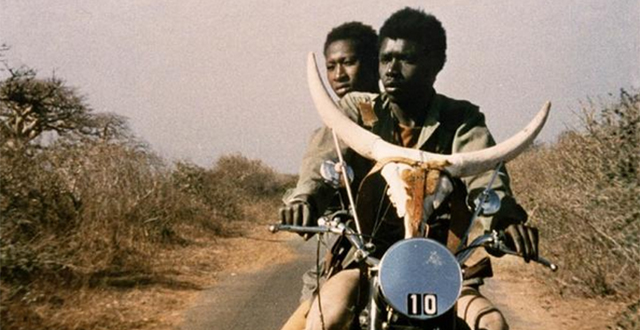
In what will be a special week-long theatrical run at MoMA in NYC - for which the filmmaker, Mati Diop, will be present - two of her films ("Atlantiques" (2009) and "A Thousand Suns" (2013)) will be paired, along with the seminal 1972 film, "Touki Bouki," made by her uncle, the late Senegalese auteur, Djibril Diop Mambety.
The week-long (January 20–27, 2015) run is a collaboration between MoMA and UniFrance Films, whose new initiative, Young French Cinema, promotes emerging French filmmakers in North America in partnership with the Cultural Services of the French Embassy.
"Touki Bouki" will also be shown 3 times over the course of the week-long theatrical run, in a new digital restoration by the World Cinema Foundation.
Meanwhile, Mati Diop's "Mille soleils" ("A Thousand Suns"), explores the legacy of "Touki Bouki," as she journeys in search of her origins through the footprints left by the film her late uncle made, and along the way gets to know "Touki Bouki's" 2 main actors, 35 years later.
Based on his own story and script, Djibril Diop Mambéty reportedly made "Touki Bouki" with a $30,000 budget. Often compared to films of the French New Wave, Mambety puts his stamp on a film that incorporates stylistic flourishes that were considered uncharacteristic of most African films at the time. The film both highlights and struggles with the hybridization of Senegal.
There's an insolence that’s expressed in it, we could say, a freedom from formality, as well as a great sense of humor.
As his niece Mati Diop has insisted, it’s also the film where her uncle reveals himself the most.
Her exploration of "Touki Bouki" is an interesting, worthwhile watch. I don't believe a documentary has ever been made that celebrates the film, and considers its legacy, given its significance in African cinema history.
It's a film (and I could name several others) that really deserves its proper restoration and re-release in HD, preserving, but also reintroducing it to new generations, and those who are just not aware of it.
Mati Diop studied at Le Fresnoy (National Studio of Contemporary Arts) and Le Pavillon (an art residency of the Palais de Tokyo). Her films have screened worldwide to acclaim.
If you'll be in NYC this week, from January 20–27, 2015, add this week-long run to your calendar.
Check out the list of screening days and times for each film here.
Press Release: THE TALES OF HOFFMANN
Park Circus
Spectacular new 4K restoration reissued in the UK, 27 February.
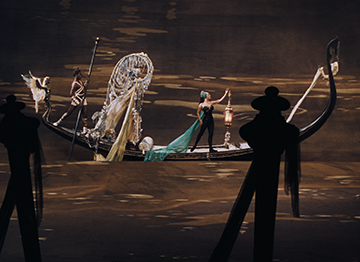
Newly restored in 4K by The Film Foundation and BFI National Archive in association with STUDIOCANAL, The Tales of Hoffmann returns to cinemas on 27 February, opening at BFI Southbank and selected sites nationwide. Rendering Jacques Offenbach's fantastical opera in vivid Technicolor, The Tales of Hoffmann represents the culmination of Powell and Pressburger's experimentation with the outer boundaries of an art form.
Told through sequences which combine dance, opera and film, The Tales of Hoffmann continues an aesthetic adventure that began three years previously with the release of The Red Shoes. Moira Shearer features prominently once again, playing various roles in this story of a Romantic poet's fraught quests for love and lust - and the depths of man's folly in pursuit of both.
The prologue to the tales takes place in the theatre of Nürnberg, where German Romanticist E.T.A. Hoffmann and his rival Councillor Lindorf both hope to meet Stella, the prima ballerina performing The Enchanted Butterfly. When Lindorf intercepts a token from Stella intended for Hoffmann, the poet retires to a nearby tavern, orders a drink and recounts three stories of romantic misadventure to the rowdy student clientele.
Moving from the fashionable boutiques of Paris to bacchanalian orgies in a nightmarish Venice, and from the naiveté of youth to the weight of experience, Hoffmann's stories combine to form three facets of their narrator's evolving struggle with true love.
The Tales of Hoffmann returns to cinemas on 27 February, opening at BFI Southbank and selected sites nationwide. The Tales of Hoffmann has been restored by The Film Foundation and the BFI National Archive in association with STUDIOCANAL. Restoration funding was provided by the Hollywood Foreign Press Association, the Franco-American Cultural Fund, The Film Foundation, and the Louis B. Mayer Foundation.
American Cinema Restored: A Tribute to Martin Scorsese's Film Foundation
Austrian Filmmuseum
December 4, 2014 to January 8, 2015
The Film Museum completes its own anniversary year with a smooth transition to another: From December 2014 to January 2015, we celebrate the work of The Film Foundation on the eve of its 25th birthday. Founded in 1990 by Martin Scorsese, the Film Museum's honorary president, with the goal of preserving American Cinema in all its diversity, The Film Foundation has since effected the restoration and preservation of about 1000 films in cooperation with the most important film archives in the United States – no other organization outside the archival world has done as much to save and protect film history.
From this vast pool of preserved films, the retrospective presents 48 works in gloriously restored film prints, focusing on a period (1928 to 1963) known as the classical era of American cinema – and extending an invitation to examine and perhaps revise this notion of the „classical“. Canonized achievements like Frank Capra's It Happened One Night, Alfred Hitchcock's Shadow of a Doubt or Charles Laughton's The Night of the Hunter are combined with overlooked films to sketch an alternative history of Hollywood: from the beginnings of sound to the collapse of the studio system; from comedies to westerns, from musicals to melodramas, from crime to war films. Yet in accordance with the mission of The Film Foundation, the scope of the series also extends beyond the boundaries of the dream factory and the standards of narrative filmmaking with a selection of shorts and documentaries expanding the potential pathways through America and its cinema.
It is not only in the lesser known areas of cinema – from the early color experiment Wonderland of California or the astonishing world war document The Fighting Lady to unknown masters of the avant-garde – that The Film Foundation has done wonders for the visibility of film on film. It has also shed new light on classic titles such as Love Affair or legendary “B” pictures like The Big Combo by making them accessible again in their original shape and form, after they had languished for decades in the public domain netherworld of bad 16mm prints. Today, even prestige productions like Otto Preminger's Bonjour Tristesse or All About Eve by Joseph L. Mankiewicz are rarely shown the way they were intended to be seen, as genuine film experiences. Now, in many cases, a digital facsimile is projected instead of the restored prints.
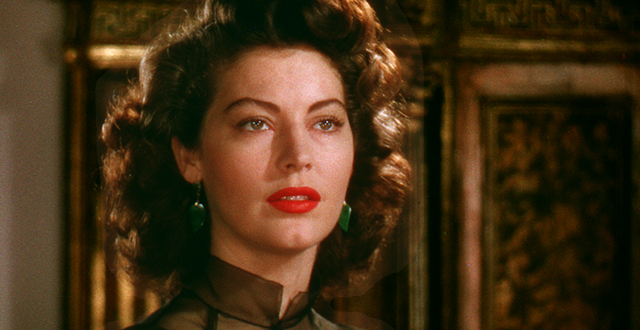
„American Cinema Restored“ highlights neglected masterpieces like Michael Curtiz’ The Breaking Point starring John Garfield (a superior 1950 adaptation of the Hemingway novel To Have and To Have Not) or the œuvres of such mavericks as Ida Lupino (The Bigamist). The renowned Viennese writer and stage director Berthold Viertel can be discovered as an American filmmaker with The Wiser Sex, as part of a strand in the retrospective emphasizing the contributions of Central European émigrés to the cinema of the United States. Via Josef von Sternberg, Max Ophüls and Andre de Toth (or Peter Lorre’s star turn in The Chase), this line can be traced directly to the culture of film noir – a „new wave“ that gave exemplary expression to the ruffled psyche of a nation in the 1940s (and, subsequently, the McCarthy years), before descending into complete madness in Sam Fuller's furious thriller Shock Corridor at the beginning of the 1960s. By then, a „post-classical“ era had begun, and new kinds of independent cinema had started to appear. In 1953, a boldly neorealist film such as The Little Fugitive was still an exception, but during the transition into the next decade, works like John Cassavetes' Shadows or Shirley Clarke's The Connection heralded a decisive departure towards independence.
Somewhere between these vastly different forms of individual expression and Hollywood's frequently evoked „genius of the system“ lies a gateway into one of the most fecund periods in film history – and to the tapestry that is American Cinema Restored.
This retrospective was made possible by The Film Foundation, the U.S. Embassy in Vienna, and the film archives who oversaw the 48 restorations: UCLA Film & Television Archive, Museum of Modern Art, George Eastman House, Library of Congress, Academy Film Archive, and Anthology Film Archives.
Margaret Bodde, executive director of the Film Foundation, and Kent Jones, director of the New York Film Festival, will be our guests for the opening days, while Martin Scorsese will provide audiences with a special video introduction to the series.
Schoonmaker, Scorsese on Powell and Pressburger's TALES OF HOFFMANN
John Hopewell
Scorsese’s longtime editor introduces the seminal Powell and Pressburger title in Lyon
This week, Camerimage film festival presents a retrospective of the films of Michael Powell and Emeric Pressburger. Last month at the Lumière Festival, Thelma Schoonmaker, the three-time Oscar winning editor and Powell’s widow, spoke about “The Tales of Hoffmann,” Powell and Pressburger’s 1951 adaptation of Jacques Offenbach’s opera, which is one of the films screening at Camerimage.
Martin Scorsese has influenced generations of new filmmakers. But who and what films influenced Scorsese? One front-runner: “The Tales of Hoffmann,” Michael Powell and Emeric Pressburger’s 1951 adaptation of Jacques Offenbach’s opera, which liberated the duo from the constraints of early 1950s’ sound cinema.
In a video presentation made for and screened at the Lyon Lumière Festival in October, Scorsese admitted that he became “rather obsessed” by the movie.
That could be an understatement. Attending Lyon, Thelma Schoonmaker, Scorsese’s three-time Oscar winning editor and Powell’s widow, took a captivated audience through the film, shot in only 17 days, its singularity and huge impact on not only Scorsese but also George Romero. Cecil B. DeMille was another large admirer. Bertrand Tavernier pointed to “Blade Runner” as just one movie that channeled “Tales.”
Starring Robert Rounseville as Hoffmann, Moira Shaerer in a double act- an automated doll Olympia and Hoffmann’s current love Stella, a dancer – plus the bolt-eyed Robert Helpmann and French dancer Leonide Massine, and featuring only dance and operatic song whose singers are identified in a credit roll reveal, “Tales of Hoffmann” was “written as a silent film,” Schoonmaker said.
Thomas Beecham recorded the score. It was then played over loudspeakers in a big silent film stage. “That left Powell and Pressburger the freedom to do anything they wanted because they didn’t have to worry about sound,” Schoonmaker explained.
She added: “My husband, Michael Powell, and the cameramen all felt free as in the silent days. A Technicolor camera was huge, with three strips of film running through it, because they needed a blimp to cover the sound. On this movie they could take it off, and the camera could fly!
“The camera is dancing to the music.”
Restoring the movie, she came to understand why Scorsese was so obsessed by the movie.
“When we were cutting ‘Raging Bull,’ Martin Scorsese was watching ‘The Films of Hoffmann’ on a 16mmm print over and over and over again. Finally, his assistant came in and said: ‘The Museum of Modern Art needs the print back.’”
‘Why?’ He was very angry. They said somebody else wants to see it. ‘Who?’ ‘George Romero, who made ‘Night of the Living Dead.’”
Schoonmaker went on: “Romero is as obsessed with this movie as is Martin. I can see why. The use of mostly dancers instead of opera singers – there are some opera singers but most parts are played by dancers – and the dramatic body-language and the brilliant filmmaking.”
Actor Robert Helpmann’s incredible, bolting eyes was “a direct influence on Robert De Niro in ‘Taxi Driver’ in the cab looking in the mirror: His eyes are spaced very much like that.”
“So this film is in Martin Scorsese’s DNA,” she concluded to appreciative applause.
Scorsese, whose Film Foundation played a key part in the film’s restoration, told the Lyon audience, “ ‘Tales’ was very special to me. I became kind of obsessed and entranced by the picture. ‘Red Shoes’ was full of music and dance. ‘Tales of Hoffmann’ was music and dance. The music and choreography are both the dancers and the camera, which told the story, and this is something that stayed with me in my work over the years, in all my films the choreography of the camera played to the music and how the two are combined, complementary to each other.”
He went on: “This painstaking restoration, supervised by my friend and collaborator Thelma Schoonmaker has been a longtime coming, and I think you’ll see it is worth every minute.”
“The Tales of Hoffmann” was indeed watched by an entranced audience in Lyon. If it weren’t for the music, you could have heard a pin drop in the house.
http://www.variety.com/2014/film/festivals/shoonmaker-scorsese-talk-up-tales-of-hoffmann-1201329816/