Martin Scorsese created the World Cinema Project (WCP) in 2007 recognizing the urgent need to preserve, restore, and provide access to films from around the world. To date, 72 films from Africa, Asia, Eastern Europe, Central America, South America, and the Middle East have been restored, preserved, and exhibited for global audiences. As part of the WCP, the African Film Heritage Project (AFHP) was launched in 2017 in partnership with the Pan African Federation of Filmmakers (FEPACI) and UNESCO, in collaboration with Cineteca di Bologna, to preserve the legacy of African cinema. The WCP also supports Restoration Film Schools, intensive, results-oriented workshops allowing students and professionals to learn the art and science of film restoration and preservation. Titles are available for exhibition rental by clicking "Book This Film."

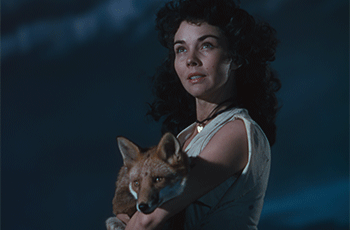
FALL OF OTRAR, THE
GIBEL OTRARA
Director: Ardak Amirkulov
WRITTEN BY: Aleksey German, Svetlana Karmalita
EDITING: Aiman Kistauova
DIRECTOR OF PHOTOGRAPHY: Sapar Koichumanov
STARRING: Dokhdurbek Kydyraliyev, Tungyshpai Zhamankulov, Bolot Beyshenaliev, Abdurashid Makhsudov, Zaur Zekhov, Kasym Zhakibayev
COUNTRY OF PRODUCTION: Kazakhstan
LANGUAGE: Kazakh, Mandarin, and Mongolian
COLOR INFO: Color
RUNNING TIME: 156 minutes
Restored by The Film Foundation’s World Cinema Project and Cineteca di Bologna at L’Immagine Ritrovata laboratory, in collaboration with Ardak Amirkulov. Funding provided by the Hobson/Lucas Family Foundation.
NOTES ON THE RESTORATION:
Restored in 4K from the original camera and sound negatives. Scanning was performed by ARDFILM in Almaty (Republic of Kazakhstan). Ardak Amirkulov supervised the scanning and approved the final grading. Special thanks to Daniel Bird. Restoration work was completed in 2024 by L’Immagine Ritrovata.
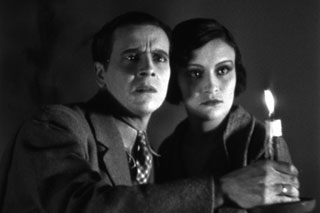
FANTASMA DEL CONVENTO, EL
Director: Fernando de Fuentes
WRITTEN BY: Jorge Bezet, Fernando de Fuentes, Juan Bustillo Oro
DIRECTOR OF PHOTOGRAPHY: Ross Fisher
PRODUCER: Jorge Bezet
STARRING: Enrique del Campo, Marte Roel, Carlos Villatoro, Paco Martínez, Victorio Blanco
COUNTRY OF PRODUCTION: Mexico
LANGUAGE: Spanish with English subtitles
COLOR INFO: Black and White
RUNNING TIME: 85 minutes
PRODUCER: Jorge Bezet
Restored by UCLA Film & Television Archive and The Film Foundation’s World Cinema Project, with funding provided by the George Lucas Family Foundation.
NOTES ON THE RESTORATION:
Preserved from the 35mm nitrate picture and track negatives and a 16mm acetate composite dupe negative. Laboratory services by Fotokem, Roundabout Entertainment, Inc., Audio Mechanics, DJ Audio, Inc., Titrafilm Paris. Special thanks to Viviana Garcia Besne, Permanencia Voluntaria; Albino Álvarez Gómez, Filmoteca de la UNAM.
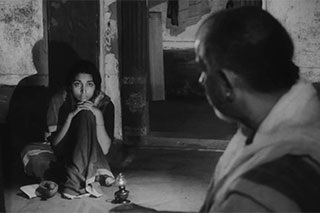
GHATASHRADDHA
Director: Girish Kasaravalli
WRITTEN BY: Girish Kasaravalli, K.V. Subanna
EDITING: Umesh Kulkarni
DIRECTOR OF PHOTOGRAPHY: S. Ramachandra
STARRING: Narayan Bhatt, Ramaswamy Iyengar, Janganath, Ajith Kumar, Shanta Kumari, Meena Kuttappa, Ramakrishna, Suresh
COUNTRY OF PRODUCTION: India
LANGUAGE: Kannada
COLOR INFO: B&W
RUNNING TIME: 115 minutes
Restored by The Film Foundation’s World Cinema Project and Film Heritage Foundation at L’Immagine Ritrovata laboratory in association with Girish Kasaravalli. Funding provided by the Hobson/Lucas Family Foundation.
NOTES ON THE RESTORATION:
Restored using the 35mm original camera negative preserved at the NFDC-National Film Archive of India and a 35mm print preserved at the Library of Congress.
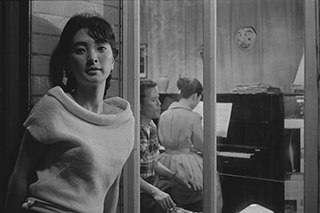
HOUSEMAID, THE
HANYO
Director: Kim Ki-Young
WRITTEN BY: Kim Ki-Young
EDITING: Kim Ki-Young
DIRECTOR OF PHOTOGRAPHY: Kim Deok-jin
PRODUCER: Kim Young-chul
MUSICAL DIRECTOR: Han Sang-Ki
ART DIRECTOR: Park Seok-in
STARRING: Lee Eunshim (Housemaid), Kim Jin-kyu (Dong-sik), Ju Jeung-nyeo (Dong-sik’s wife), Um Aeng-ran (Cho Kyung-hee)
COUNTRY OF PRODUCTION: South Korea
LANGUAGE: Korean with English subtitles
COLOR INFO: Black and White
RUNNING TIME: 110 minutes
PRODUCTION COMPANY: Korean Munye Films Co., Ltd.
PRODUCER: Kim Young-chul
Restored in 2008 by the Korean Film Archive (KOFA), in association with The Film Foundation's World Cinema Project and HFR-Digital Film laboratory. Additional restoration funded by Armani, Cartier, Qatar Airways and Qatar Museum Authority.
Kim Ki-young’s Hanyo, or The Housemaid, is one of the true classics of South Korean cinema, and when I finally had the opportunity to see the picture, I was startled. That this intensely, even passionately claustrophobic film is known only to the most devoted film lovers in the west is one of the great accidents of film history. I’m proud that the World Cinema Foundation is participating in the restoration and preservation of this remarkable picture. I am eager for more people to get to know and love The Housemaid.
–Martin Scorsese, February 2008
NOTES ON THE RESTORATION:
Hanyo has been restored digitally by the Korean Film Archive (KOFA) with the support of the World Cinema Foundation. The original negative of the film was found in 1982 with two missing reels, 5 and 8. In 1990 an original release print with hand-written English subtitles was found and used to complete the copy. This surviving print was highly damaged, and the English subtitles occupied almost half of the frame area. The long and complex restoration process has involved the use of a special subtitle-removal software and included flicker and grain reduction, scratch and dust removal, color grading.
Image: © Courtesy of Korean Film Archive
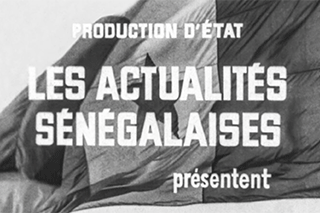
IFE / 3ÈME FESTIVAL DES ARTS
Director: Paulin Soumanou Vieyra
COUNTRY OF PRODUCTION: Senegal
LANGUAGE: French with English subtitles
COLOR INFO: Black and White
RUNNING TIME: 13 minutes
Restored by The Film Foundation’s World Cinema Project and Cineteca di Bologna at L’Immagine Ritrovata laboratory, in collaboration with the Ministère de la Culture et du Patrimoine Historique de Sénégal – Direction du Cinéma. Restoration funded by the Hobson/Lucas Family Foundation.
This restoration is part of the African Film Heritage Project, an initiative created by The Film Foundation's World Cinema Project, the Pan African Federation of Filmmakers and UNESCO―in collaboration with Cineteca di Bologna―to help locate, restore, and disseminate African cinema.
NOTES ON THE RESTORATION:
The 4K restoration was completed using a 16mm print preserved by the Direction du Cinéma in Senegal. With special thanks to Tiziana Manfredi and Marco Lena.
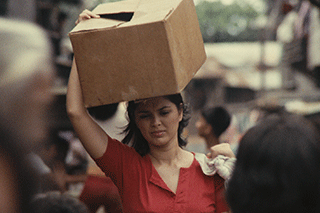
INSIANG
Director: Lino Brocka
WRITTEN BY: Mario O’Hara and Lamberto Antonio
EDITING: Augusto Salvado
DIRECTOR OF PHOTOGRAPHY: Conrado Baltazar
PRODUCER: Miguel De Leon Severino
MUSICAL DIRECTOR: Max Jocson
SOUND: Luis Reyes, Ramon Reyes
STARRING: Hilda Koronel, Mona Lisa, Ruel Vernal, Rez Cortez, Marlon Ramirez
COUNTRY OF PRODUCTION: Philippines
LANGUAGE: Tagalog with French and English subtitles
COLOR INFO: Color
RUNNING TIME: 124 minutes
PRODUCER: Miguel De Leon Severino
Restored by Cineteca di Bologna/ L’Immagine Ritrovata. Restoration funded by The Film Foundation’s World Cinema Project and the Film Development Council of the Philippines.
I’m so pleased that Insiang, the second of the great Lino Brocka’s films that we’ve managed to restore, has been selected for this year’s Cannes Classics: back in 1976, this extraordinary family melodrama was the first picture from the Philippines ever selected for Cannes. Brocka was like a force of nature in world cinema, and Insiang was among his greatest achievements. - Martin Scorsese, May 2015
Insiang is, first and foremost a character analysis: a young woman raised in a miserable neighborhood. I need this character to recreate the ‘violence’ stemming from urban overpopulation, to show the annihilation of a human being, the loss of human dignity caused by the physical and social environment and to stress the need for changes to these life conditions […] My characters always react through fighting. I have conceived Insiang like an immoral story: two women share the same man, the daughter avenges herself and, in the end, she reveals herself: she had conspired to kill her mother’s lover without having ever loved him, so that the murder was, in fact, unnecessary. Censorship refused this ending.” - Lino Brocka
In 1977 I was in Sydney for the film festival. Before going home, I zigzagged my way back through Jakarta, Singapore, Kuala Lumpur, Hong-Kong, Manila and Seoul, to discover a new filmmaker and an unknown film: Insiang by Lino Brocka. When Insiang was released on December 17, 1976, it did not do well, and led to the collapse of CineManila, the company founded by Brocka in 1974 after the extraordinary success of Tinimbang Ka Ngunit Kulang. The shooting of Insiang began on December 1 and lasted 11 days. Knowing these dates is important as they reveal the extreme urgency he felt, and his unique, authentic desire to make this film. Insiang also presents an unusual, brilliant mise-en-scène which shows the characters being torn apart by passion, by a sort of ardent energy. I am very pleased that, two years after Manila in the Claws of Light, Cannes Classics is showcasing another restoration of a Brocka film. I still remember the excitement, along rue Antibes, surrounding the screening of Insiang at the Quinzaine de Réalisateurs, in 1978. That was a very fulfilling and emotional experience, and I’m sure the same will be true today. - Pierre Rissient
NOTES ON THE RESTORATION:
The restoration of Insiang was made possible through the use of the original camera and sound negatives deposited at LTC laboratories by producer Ruby Tiong Tan.
The negative was wet-scanned at 4K resolution and digital restoration was very time-consuming. Some portions of the film, where the negative was intercut to the internegative were extremely damaged and two shots were replaced by use of a 35mm positive print preserved at the BFI National Archive.
Despite an overall acceptable state of preservation, the original optical sound negative presented critical recording issues. The sound restoration required considerable effort to try and solve or minimize the severe metallic hiss and distortions. Several acquisition methods were tested, leaving, however, very little room for improvement.
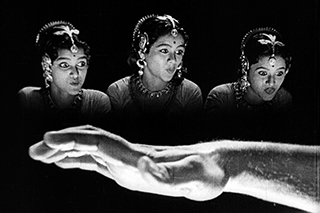
KALPANA
Director: Uday Shankar
WRITTEN BY: Uday Shankar, Amritlal Nagar
EDITING: N.K. Gopal
DIRECTOR OF PHOTOGRAPHY: K. Ramnoth
FROM: National Film Archive of India
STARRING: Uday Shankar (Udayan & Writer), Amala Uday Shankar (Uma), Lakhmt Kanta (Kamini), Dr. G.V. Subbarao (Drawing Master), Brijo Behari Banerji (Uma’s Father)
COUNTRY OF PRODUCTION: India
LANGUAGE: Hindi
COLOR INFO: Black and White
RUNNING TIME: 155 minutes
PRODUCTION COMPANY: Uday Shankar Production
SET DESIGNER: K.R. Sharma
Restored in 2008 by Cineteca di Bologna/L’Immagine Ritrovata, in association with The Film Foundation’s World Cinema Project, the family of Uday Shankar, the National Film Archive of India, and Dungarpur Films. Restoration funded by Doha Film Institute.
A great work of hallucinatory, homemade expressionism and ecstatic beauty, Uday Shankar’s Kalpana (Imagination) is one of the enduring classics of Indian cinema. Shankar, the brother of the great Ravi Shankar, was one of the central figures in the history of Indian dance, fusing Indian classical forms with western techniques. In the late 30s, he established his own dance academy in the Himalayas, whose students included his brother Ravi and future filmmaker Guru Dutt (who worked as an assistant on Kalpana). After the closure of the academy in the early 40s, Shankar started preparations on his one and only film, many years in the making.
Kalpana, with an autobiographical narrative of a dancer who dreams of establishing his own academy (starring Uday Shankar and his wife, the great Amala Shankar – the film also marks the debut of Padmini, who was 17 years old at the time), is one of the few real “dance films” – in other words, a film that doesn’t just include dance sequences, but whose primary physical vocabulary is dance. A commercial failure when it was released, the film is now regarded, justifiably, as a creative peak in the history of independent Indian filmmaking.
NOTES ON THE RESTORATION:
Kalpana has been digitally restored by the World Cinema Foundation at Cineteca di Bologna/L’Immagine Ritrovata laboratory using a combined dupe negative and a positive print held at the National Film Archive of India.
The combined dupe negative was badly damaged and marked by lines, tears, dirt, dust, white marks and poor definition. The restoration required a considerable amount of both physical and digital repair in order to recover the beauty of faces, movements and costumes, and to reduce the aforementioned issues. The original sound was digitally transferred from the combined dupe negative. Digital cleaning and background noise reduction was applied.
The restoration has generated a duplicate negative, new optical soundtrack negative for preservation as well as a complete back-up of all the files produced by the digital restoration.
Image: © Courtesy of National Film Archive of India
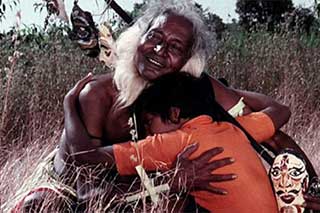
KUMMATTY
Director: Aravindan Govindan
WRITTEN BY: Aravindan Govindan
DIRECTOR OF PHOTOGRAPHY: Shaji N. Karun
STARRING: Ramunni, Master Ashokan, Vilasini Reema, Kothara Gopalkrishnan, Sivasankaran Divakaran, Vakkil, Mothassi, Shankar
COUNTRY OF PRODUCTION: India
LANGUAGE: Malayalam with English subtitles
COLOR INFO: Color
RUNNING TIME: 90 minutes
PRODUCTION COMPANY: General Pictures Corporation
Restored by The Film Foundation’s World Cinema Project and Cineteca di Bologna in association with General Pictures Corporation and the Film Heritage Foundation at L’Immagine Ritrovata laboratory.
Funding provided by the Material World Foundation.
NOTES ON THE RESTORATION:
Restored in 4K using the best surviving element: a vintage 35mm print struck from the original camera negative and preserved at the National Film Archive of India. A second 35mm print with English subtitles was used as a reference.
Color grading was supervised by the film’s cinematographer Shaji N. Karun.
Special thanks to Ramu Aravindan.
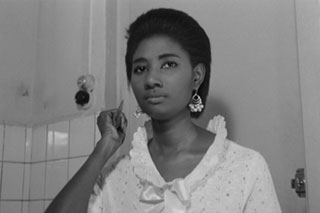
LA FEMME AU COUTEAU
WOMAN WITH THE KNIFE, THE
Director: Timité Bassori
WRITTEN BY: Timité Bassori
EDITING: Guy Ferrant
DIRECTOR OF PHOTOGRAPHY: Ivan Baguinoff
STARRING: Timité Bassori, Danielle Alloh, Emmanuel Diaman, Tim Sory, Marie Vieyra
COUNTRY OF PRODUCTION: Côte d'Ivoire
LANGUAGE: French with English subtitles
COLOR INFO: Black and White
RUNNING TIME: 77 minutes
PRODUCTION COMPANY: Société Ivoirienne de Cinéma
Restored in 2019 by Cineteca di Bologna/L’Immagine Ritrovata and The Film Foundation’s World Cinema Project. Funding provided by the Hobson/Lucas Family Foundation.
This restoration is part of the African Film Heritage Project, created by The Film Foundation, FEPACI and UNESCO – in collaboration with Cineteca di Bologna – to help locate, restore, and disseminate African cinema.
NOTES ON THE RESTORATION:
The 4K restoration of La femme au couteau was made from the 35mm original camera and sound negatives. The original camera negative was damaged by mold, dirt, and scratches, and therefore required an extensive amount of digital restoration. Director Timité Bassori supervised the picture grading.
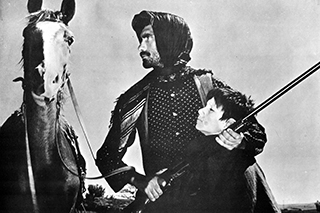
LAW OF THE BORDER
HUDUTLARIN KANUNU
Director: Lüfti Ö. Akad
WRITTEN BY: Lüfti Akad, Yilmaz G Üney
EDITING: Ali Ün
DIRECTOR OF PHOTOGRAPHY: Ali Uğur
PRODUCER: Dadaş Film, shot in Yildiz Film Studios
MUSICAL DIRECTOR: Ali Uğur
FROM: Dadaş Film
STARRING: Yilmaz Güney (Hidir), Pervin Par (Ayse, the teacher), Hikmet Olgun (Yusuf), Erol Taş (Ali Cello), Tuncel Kurtiz (Bekir), Osman Alyanak (Dervis Aga), Aydemir Akbas (Abuzer), Atilla Erg ün (Zeki, first lieutenant)
COUNTRY OF PRODUCTION: Turkey
LANGUAGE: Turkish with French and English subtitles
COLOR INFO: Black and White
RUNNING TIME: 74 minutes
PRODUCER: Dadaş Film, shot in Yildiz Film Studios
Restored in 2013 by Cineteca di Bologna/L’Immagine Ritrovata laboratory, in association with The Film Foundation’s World Cinema Project, Dadaş Films, and the Turkish Ministry of Culture. Restoration funded by Doha Film Institute.
Turkish cinema in sixties took place in a dream world. The movies of that era refused to look directly at Turkish society. Hudutların Kanunu, on which Yılmaz Güney met director Lütfi Ömer Akad, is one of the movies that changed this state of affairs. Akad’s genuine creative vision influenced Güney’s style as an actor: one can easily see the difference in Güney’s acting before and after Hudutların Kanunu. Akad’s influence was a positive one. . .
Güney’s natural performance marked a change in Turkish Cinema. This was the beginning of what would later be called “New Cinema” in Turkey. With its powerful cinematography and its direct and realistic depiction of social problems, Hudutların Kanunu is one of the early milestones of Turkish cinema. Given the manner of storytelling and the style of photography, one might almost say that Akad’s film is a Western.
Hudutların Kanunu depicts vital problems in the society of South East Turkey. Lack of education, no agriculture, and unemployment compelled people to live by the “law of the border” (Hudutların Kanunu) – in other words, smuggling. Hudutların Kanunu underlines the importance of education, which is the crucial element of socio-economical progress in third world countries. It also helps us to understand the reasons behind the ongoing, veiled war along Turkey’s South East border. Forty five years ago, Lütfi Ömer Akad was alerting Turkish society of the likely consequences if preventive measures are not taken in time. He alerted us with a great and lasting film, Hudutların Kanunu.
(Fatih Akin, May 2011)
Ömer Lüfti Akad’s Hudutların Kanunu comes as a revelation to first-time viewers – a work of great visual and dramatic force, of terrific purity and ferocity. It was made during the year that its star and co-screenwriter, Yilmaz Güney, made his own directing debut. And it’s not surprising for first time viewers to learn that this stunning collaboration marked a shift in Turkish cinema, and ushered in what became known as “the director generation.” Once again, the World Cinema Foundation’s advisory board member Fatih Akin has brought us a great and inspirational film.
(Kent Jones, May 2011)
NOTES ON THE RESTORATION:
The restoration of Hudutlarin Kanunu was made possible through the use a positive print provided by Nil Gurpinar, daughter of the film’s producer, and held by the Turkish Ministry of Culture.
As this print is the only known copy to survive the Turkish Coup d’Etat in 1980 – all other film sources were seized and destroyed – the restoration required a considerable amount of both physical and digital repair. The surviving print was extremely dirty, scratched, filled with mid-frame splices and sadly missing several frames. Although the film was shot in black and white, it was also printed on color stock resulting in significant decay. The restoration work produced a new 35mm dupe negative.
The World Cinema Foundation would like to specially thank Fatih Akin for recommending this title, and Ali Akdeniz and Nurhan Sekerci for facilitating the restoration process.
Image: © Courtesy of Nil Gurpinar - Dadaş Films
LE SÉNÉGAL ET LE FESTIVAL MONDIAL DES ARTS NÈGRES
Director: Paulin Soumanou Vieyra
COUNTRY OF PRODUCTION: Senegal
LANGUAGE: French with English subtitles
COLOR INFO: Black and White
RUNNING TIME: 28 minutes
Restored by The Film Foundation’s World Cinema Project and Cineteca di Bologna at L’Immagine Ritrovata laboratory, in collaboration with the Ministère de la Culture et du Patrimoine Historique de Sénégal – Direction du Cinéma. Restoration funded by the Hobson/Lucas Family Foundation.
This restoration is part of the African Film Heritage Project, an initiative created by The Film Foundation's World Cinema Project, the Pan African Federation of Filmmakers and UNESCO―in collaboration with Cineteca di Bologna―to help locate, restore, and disseminate African cinema.
NOTES ON THE RESTORATION:
The 4K restoration was completed using a 16mm print preserved by the Direction du Cinéma in Senegal. With special thanks to Tiziana Manfredi and Marco Lena.
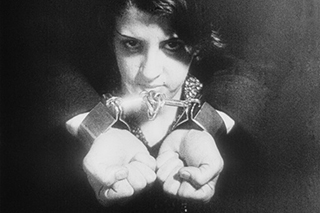
LIMITE
Director: Mário Peixoto
WRITTEN BY: Mário Peixoto
EDITING: Mário Peixoto
DIRECTOR OF PHOTOGRAPHY: Edgar Brazil
PRODUCER: Mário Peixoto
MUSICAL DIRECTOR: Brutus Pedreira (themes from Satie, Debussy, Borodin, Stravinsky, Prokofiev)
ASSISTANT DIRECTOR: Rui Costa
FROM: Cinemateca Brasileira, São Paulo
STARRING: Olga Breno (Woman #1); Taciana Rei (Woman #2); Carmen Santos (The Whore); Mario Peixoto (The Man at the cemetery); Brutus Pedreira (Man #2 and the pianist); Edgar Brazil (The Man asleep at the cinema); Faciana Rei; Raul Schnoor
COUNTRY OF PRODUCTION: Brazil
LANGUAGE: Silent
COLOR INFO: Black and White
RUNNING TIME: 120 minutes
PRODUCTION COMPANY: Cinédia
PRODUCER: Mário Peixoto
Restored in 2010 by the Cinemateca Brasileira and Cineteca di Bologna/L’Immagine Ritrovata laboratory, in association with The Film Foundation’s World Cinema Project, Arquivo Mario Peixoto, Saulo Pereira de Mello, and Walter Salles. Restoration funded by Armani, Cartier, Qatar Airways and Qatar Museum Authority.
Limite does not intend to analyse. It shows. It projects itself as a tuning fork, a pitch, a resonance of time itself. –Mário Peixoto
Then came the revelation of Limite, the first and only film by 21-year-old director Mário Peixoto. This was a film of transcendent poetry and boundless imagination. Once again, I found myself in a state of shock, not only because of the film itself, which was made in 1931 and forgotten for many years, but also for the evidence it bore, that of our creative diversity. –Walter Salles
NOTES ON THE RESTORATION:
Restored by the World Cinema Foundation at Cineteca di Bologna / L’Immagine Ritrovata Laboratory in collaboration with the Cinemateca Brasileira and Walter Salles.
Image: © Courtesy of Mário Peixoto Archive/ Cinemateca Brasileira